


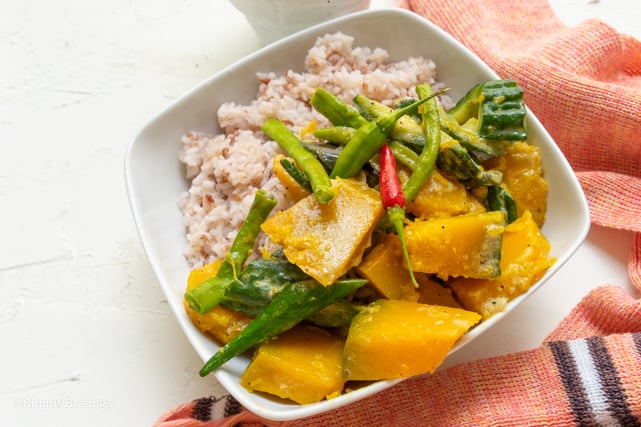
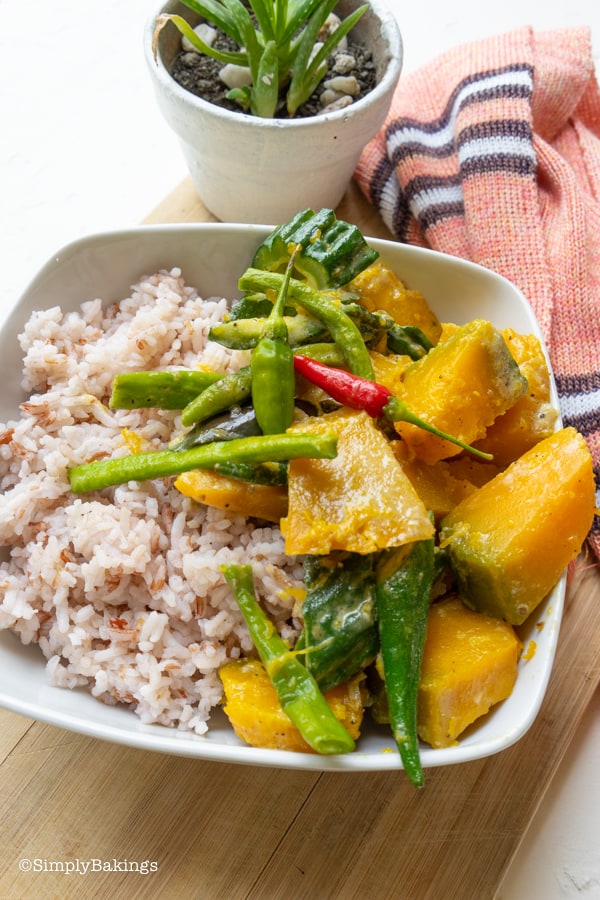
Here is a colorful, healthy, and easy to cook Filipino dish - Pinakbet Without Meat! It's a Vegan Vegetarian recipe and such a crowd-pleaser wherever I go, and you can make this recipe without any meat or seafood and under 20 minutes!
This dish is delicious with Pancit Canton, Easy Misua Soup, Bola Bola (Filipino Veggie Meatballs), Fried Fish Balls, or Vegan Isaw!
Jump to:
What is Pinakbet?
Pinakbet (or pakbet) is a colorful Filipino vegetable dish full of healthy vegetables. In travel and food videos, I've noticed that people from Ilocos love eating veggies because they grow a lot of them on their farms.
They have big fields where they plant and pick their own vegetables, which is why they make the famous Pinakbet. Over time, other places in the Philippines have also learned to cook this dish.
Filipinos regularly use Kalabasa or squash, ampalaya or bitter gourd, also known as bitter melon, okra, and eggplants. The usual cooking of Pinakbet for Filipinos is to mix the vegetables with some ground pork meat, pork belly, or bagoong (fermented shrimp paste or fermented fish).
Who invented Pinakbet?
Pinakbet originated from the Ilocos Region of the Philippines. The word pinakbet is derived from the Ilocano word pinakebbet, which means “shrunk” or “shriveled”.
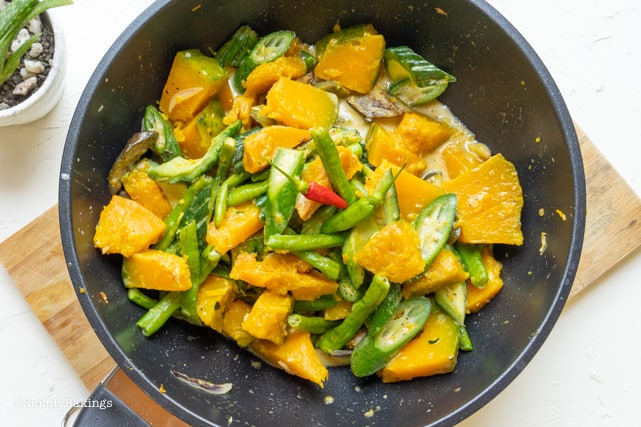
The original Ilocano pinakbet uses bagoong of fermented monamon, ginisang bagoong isda or alamang and variety of vegetables that are grown in the backyards or gardens of most Ilocano households.
Substitutions
- Use a Different Sauce: If you don’t have tamari soy sauce, regular soy sauce works fine. You can also use coconut aminos for a slightly sweeter flavor.
- Change the Squash: If you can't find kalabasa (a type of squash), you can use butternut squash or pumpkin.
Variations
- Spice It Up: For a bit of heat, add some chopped chili peppers or a pinch of chili flakes.
- Extra Flavor: Try adding a teaspoon of ginger for a different taste.
- Add Tofu: For extra protein, you can add some tofu cubes. Cook them until they are golden before adding the vegetables.
Storage
Can be stored for up to 5 days in the refrigerator in an airtight container.
Top Tips
- Cut the vegetables in uniform sizes to ensure even cooking!
- When mixing the vegetables, gently do so because cooked vegetables are softer.
- Always add the hardest vegetable first - in this case, it is the kalabasa (squash). They take longer to soften compared to okra.
- How do we know that our vegetables are cooked just enough? When a vegetable is at its darkest or brightest color, that's the time we can say it's cooked just right. For example, the ampalaya when raw is colored green, so when it is cooked just right, it would look super green.
- When cooking the vegetables, pay attention to the texture and softness. Vegetables are delicious to eat when they still have a little crunch and "bite" in them.
Ingredients
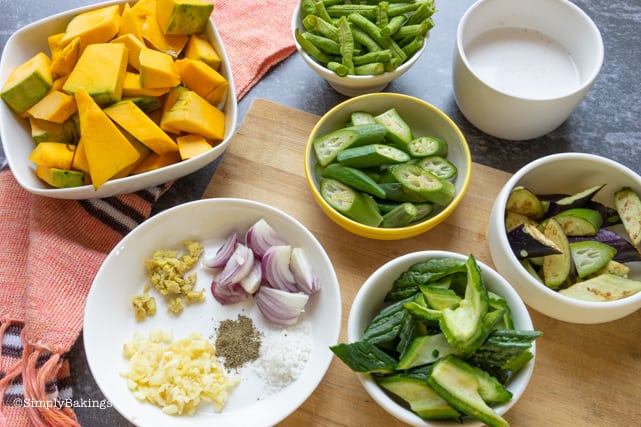
Here are the ingredients you will need:
- red shallot
- garlic cloves
- kalabasa, also known as squash
- string beans
- ampalaya (bitter melon)
- long eggplant
- okra
- coconut cream
- tamari or soy sauce
- salt
- pepper
Instructions
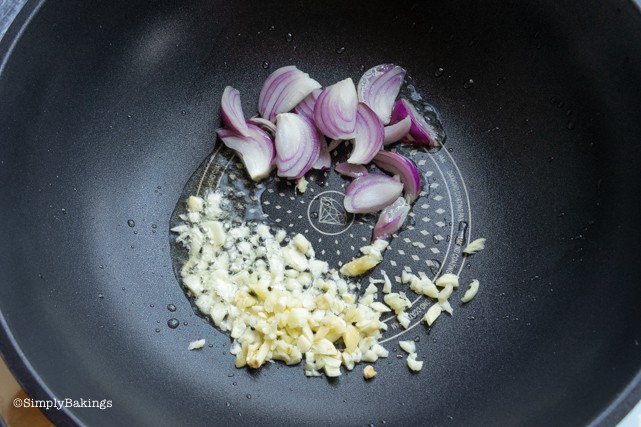
Heat a nonstick pan over medium heat and add oil. Add onions, garlic, and saute for 1 minute or until translucent:
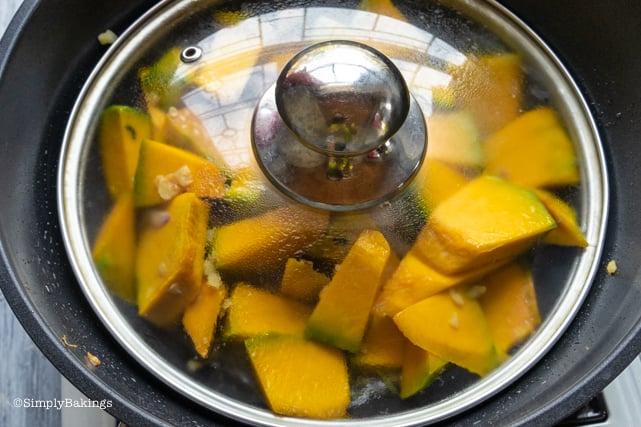
Add the kalabasa, cover, and cook until for 5 minutes or until kalabasa is tender yet crisp:
Next add the string beans, ampalaya (bitter melon), eggplant:
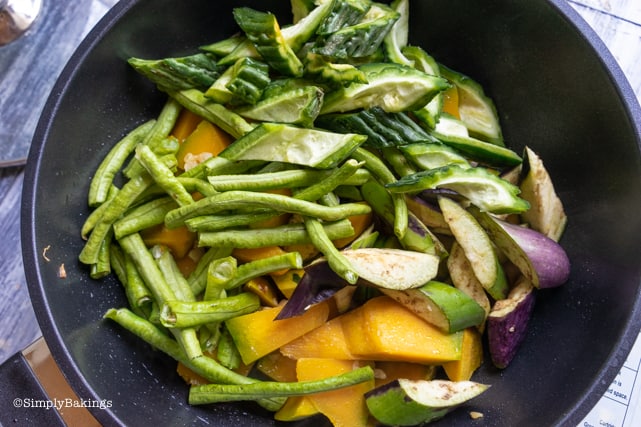
and cover with the lid for 2 to 3 minutes or until they are semi tender:
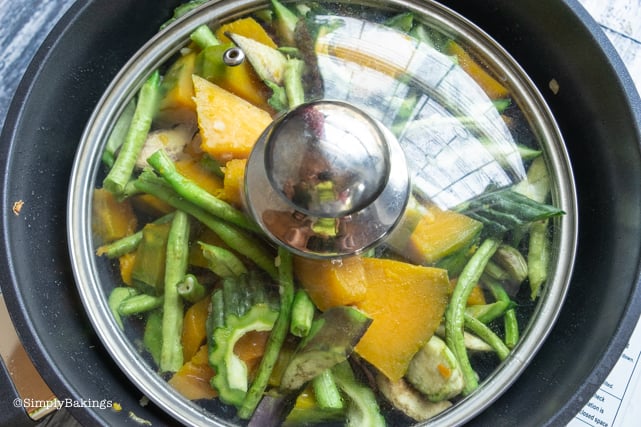
Add okra, cover with lid and continue cooking for about 1 minute:

Now, this is my favorite part (because I LOVE coconut cream)! Add coconut cream, tomatoes, soy sauce, salt and allow it to simmer for 2 to 3 minutes or until okra is cooked. It is important to NOT OVERMIX your vegetables (look up the reason in the Top Tips section 🙂 ).
Season with salt, pepper and eat with rice:
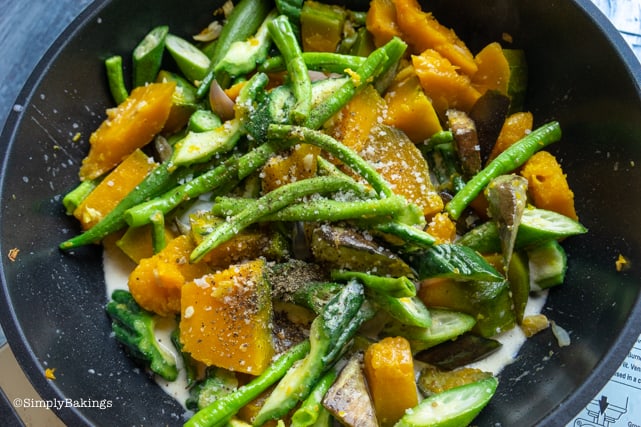
There you have it! A very healthy meal packed with vitamins and minerals, all in one authentic Filipino vegetarian recipe!
I promise you guys, it is best to eat Pinakbet with white rice ♥
Simply Bakings Recommends
Cooking this colorful Pinakbet Without Meat? A handy nonstick pan makes preparing all those vegetables easier, while airtight containers are great for saving leftovers for another meal.
Disclosure: This section contains affiliate links. If you purchase through them, Simply Bakings may earn a small commission at no extra cost to you.
Frequently Asked Questions
Pinakbet Without Meat
Ingredients
Aromatics:
- 1 small red shallot chopped
- 3 garlic cloves minced
Vegetables:
- 1½ cups kalabasa about 7 ounces, chopped into medium-sized cubes
- 1 cup string beans about 3½ ounces, cut into 2-inch pieces
- 1 cup ampalaya bitter melon, about 3½ ounces, deseeded and sliced
- 1 long eggplant cut into 4 parts
- 4-5 okra sliced in half (or into three pieces if long)
- 2 tomatoes quartered (optional)
Sauce and Seasoning:
- 1 cup coconut cream
- 1 tablespoon tamari soy sauce or soy sauce
- Salt and pepper to taste
Instructions
Sauté the Aromatics:
- Heat a nonstick pan over medium heat and add a small amount of oil.
- Add the chopped red shallot and minced garlic. Sauté for 1 minute or until the shallot is translucent.
Cook the Kalabasa:
- Add the chopped kalabasa to the pan. Cover and cook for 5 minutes, or until the kalabasa is tender yet crisp.
Add the Vegetables:
- Add the string beans, ampalaya (bitter melon), and eggplant. Cover with the lid and cook for 2 to 3 minutes, or until the vegetables are semi-tender.
- Add the sliced okra, cover, and continue cooking for about 1 minute.
Finish with Sauce and Seasoning:
- Pour in the coconut cream and add the quartered tomatoes (if using), soy sauce, and salt. Allow the mixture to simmer for 2 to 3 minutes, or until the okra is fully cooked.
- Season with additional salt and pepper to taste.
Serve:
- Serve hot with rice.
Notes

I love pinakbet and I loved it even before I knew what the dish was called. I usually called it Filipino Vegetable Medley! 🙂
Anyways, there are so many variations of this recipe out there, like some people make it without coconut cream, but I believe the coconut cream elevates the recipe. I hope you enjoy it as much as I do!


Claire M says
I love to add vegemeat here too.
JR L says
A classic filipino dish! Delicious & easy to make, thanks Lainey! Oh and I usually don't have shallots at home so I use onions.
Maria says
Can I use canned coconut milk instead of cream?
Lainey says
Hi, Maria! Thanks for letting us know your concern. We will update the recipe as soon as we try it. In the mean time, you can try our other recipes that use coconut milk.
Princess says
I will have to try this version. Never made pinakbet with coconut milk
Lainey says
You're in for a treat! Adding coconut milk gives pinakbet a creamy twist that pairs so well with the veggies. It’s a nice variation if you're looking to try something a little different but still keep that traditional flavor. Let me know how it turns out for you, Princess! 🥥🌿