


Give this tasty homemade Vegan Bagoong a try! It's creamy, flavorful, and has that authentic kick you love from traditional bagoong and it offers a healthier alternative that doesn't compromise on taste.
Looking for more Filipino Cuisine Try my Vegan Kare Kare or my Eggplant Stew!
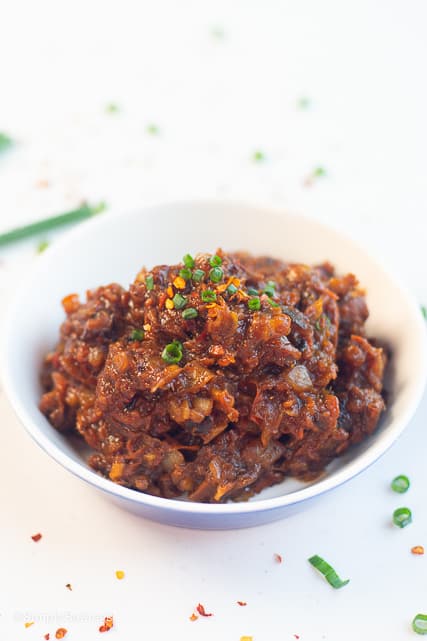
What is Vegan Bagoong?
Vegan bagoong is a type of Filipino condiment that's made without any animal products. Traditional bagoong is usually crafted from fermented fish or shrimp, but vegan bagoong uses plant-based ingredients instead.
What do I eat it with?
You can eat vegan bagoong with a variety of dishes. In Filipino cuisine, it's commonly used as a flavor enhancer or dipping sauce for dishes like green mangoes, fried eggplant, or boiled vegetables. You can also mix it into stir-fries or noodle dishes to add a savory, umami flavor. Essentially, you can enjoy it with any dish where you want to add a salty and tangy kick!
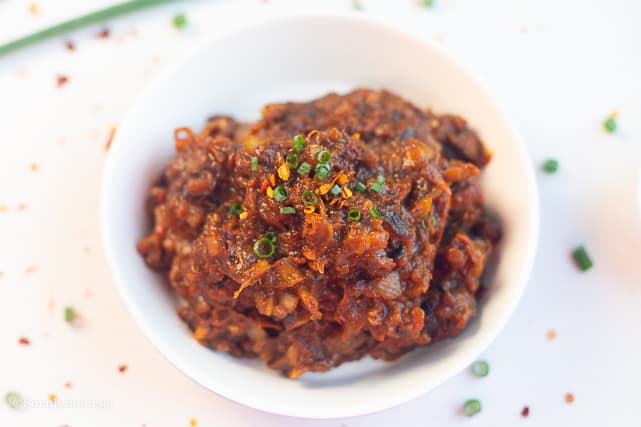
Ingredients
Listed below are all the ingredients you will need:
- olive oil
- shitake mushroom
- whole garlic
- ginger, minced
- white onion, minced
- soybean paste (Korean brand samgyupsal) or Miso paste.
- carrots
- soy sauce
- salt
- brown sugar
- coconut cream
- chili flakes*
- salt

Instructions
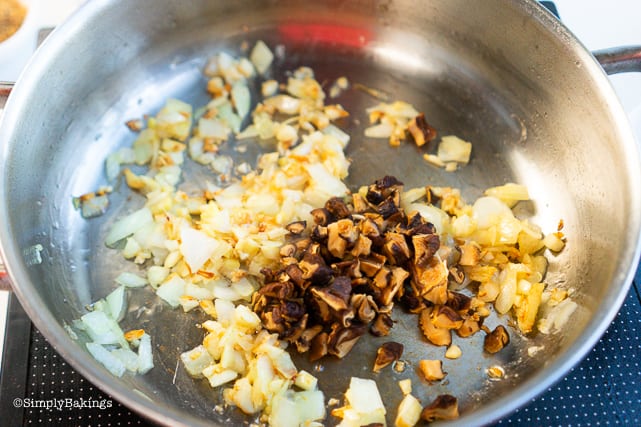
Preheat pan over medium heat, then add ⅛ cup olive oil and saute shitake mushroom until cooked. Next saute garlic, ginger, and onion until it becomes golden brown:
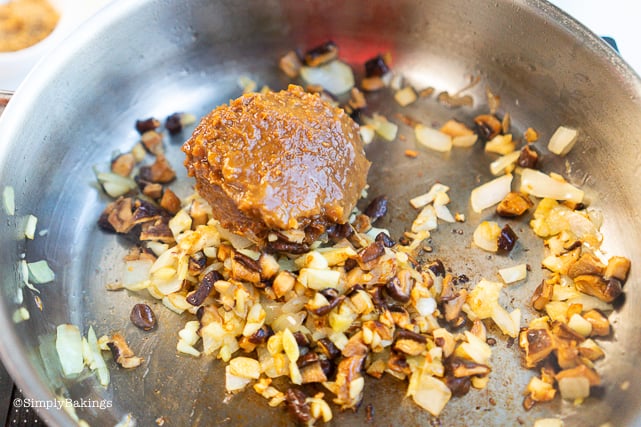
Add soybean paste and mix until cooked evenly:
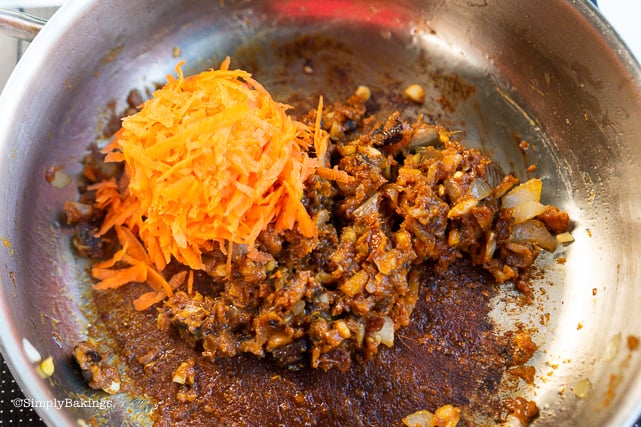
Add grated carrots, mix thoroughly with the bean paste:
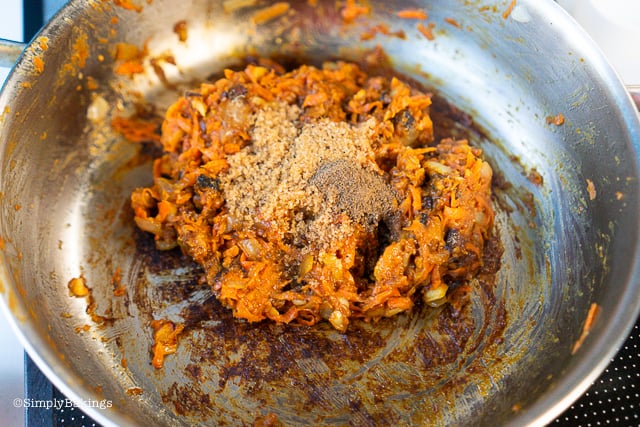
Add soy sauce, salt, brown sugar and continue mixing:
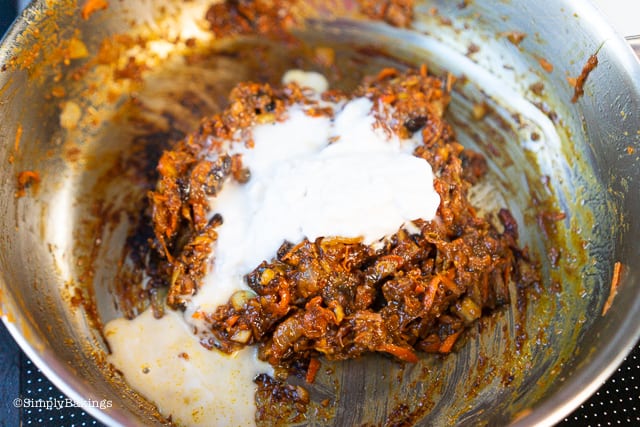
Add coconut cream, mix and allow it to simmer until coconut milk turns oily:
The Vegan Bagoong will look like this:
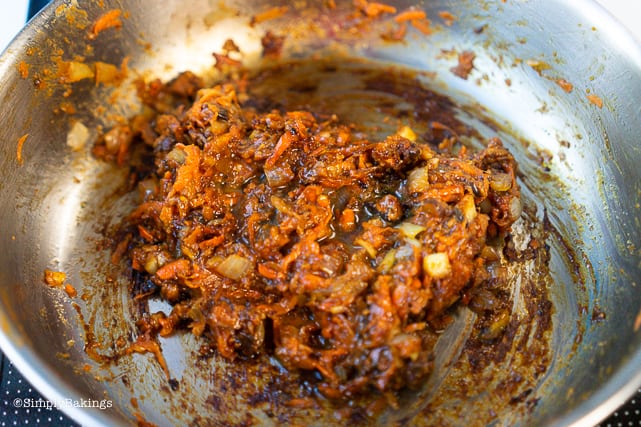
Add chili flakes if you like it spicy:
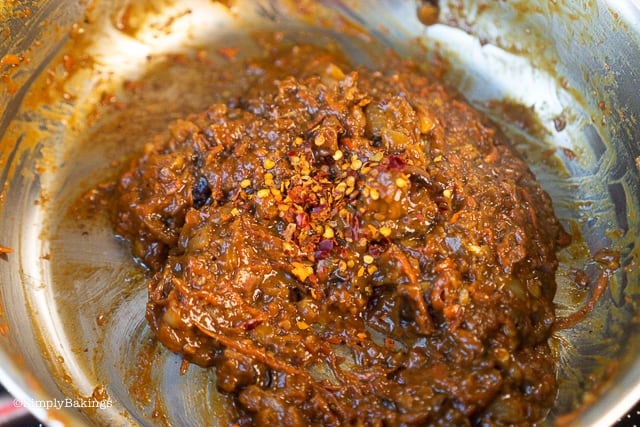
That's how quick and easy it is to make!
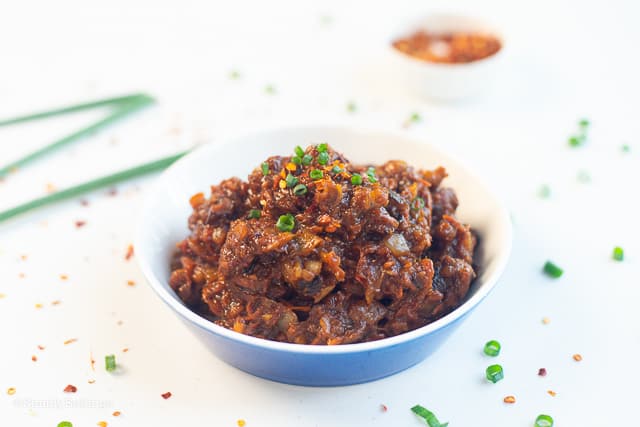
Eat this with steamed rice, or make as a delicious side dish or dip to grilled eggplants, okra, and other vegetables!
Top Tip
- Garlic! Never decrease the content of garlic for this Vegan Bagoong. A good bagoong has a lot of garlic.
Variations
- You can omit or choose not to use salt after adding in some soy sauce if you are already satisfied by its saltiness.
- If fresh coconut milk or cream isn't available, canned versions work just as well. They taste fantastic too!
Substitution
- If soybean paste isn't available, you can substitute black beans, but be aware that black beans may not offer the same flavor profile as soybean paste.
- If you don't have olive oil, feel free to use your choice of oil.
Storage
- Store in an airtight container for up to 1 week.
FAQ
More vegan recipes to try:
- Tofu Scramble Recipe - Filipino Style
- Vegan Macaroni Soup
- Vegan Filipino Bola Bola
- Vegan Isaw
- Vegan Cansi
Best Vegan Bagoong
Ingredients
- ⅕ cup olive oil
- ⅓ cup shitake mushroom diced
- 1 whole garlic minced
- 2 tablespoons ginger minced
- ¼ cup white onion minced
- 1 cup soy bean paste Korean brand samgyupsal or Miso paste
- ½ cup carrots grated
- 1 teaspoon soy sauce
- ½ teaspoon salt
- 2 tablespoon brown sugar
- ½ cup coconut cream
- 1 teaspoon chili flakes*
- pinch salt
Instructions
- Preheat pan over medium heat, then add oil.
- Saute shitake mushroom until cooked, about 2 minutes.
- Next saute garlic, ginger, and onion until it becomes golden brown.
- Add soy bean paste and mix until cooked evenly.
- Add grated carrots, mix thoroughly with the bean paste.
- Add soy sauce, salt, brown sugar and continue mixing.
- Add coconut cream, mix and allow it to simmer until coconut milk turns oily.
- Add chili flakes if you like it spicy and season with salt if needed.
Notes



Christine C. says
Hello! I'm curious to try this recipe but I just wanna know how long can it stay good to eat? And does it have to be refrigerated? Thank you!
Lainey says
Hello Christine,
Yes, please refrigerate this vegan bagoong because it has coconut cream which easily goes bad if left at room temperature after some time. Make sure to cool it completely before storing it in an airtight container. If you keep it refrigerated, it can last about 3-4 days.
Thank you for visiting my blog! Are you a fan of Filipino foods?
Jannet says
When you say 1 whole garlic, do you mean a whole bulb of garlic or a clove?
Lainey says
Hi Jannet,
I mean the whole bulb of garlic. Thanks for swinging by! I hope you can try this recipe. Enjoy!
Lizzy L says
Wow! This tasted very similar to Bagoong, I can't believe it.
Lainey says
This plant-based version of bagoong is truly amazing. It's good to know that you tried this recipe. Thank you, Lizzy! 🙂
Roy L says
LOVE how authentic this tasted. I ate it with just rice and it was sooo good. haha
susan says
The recipe itself is well-structured and easy to follow. The ingredients list is precise, and I appreciated the detailed explanations of each step. I tried making this one and the end result was a flavorful and aromatic vegan bagoong that exceeded my expectations!
Lainey says
Wow. That's great! Thank you, Susan. I appreciate your kind words, and I hope you can try my other vegan recipes, too. Enjoy! 🙂
Ding Carpio says
I find three kinds by of Korean soybean paste in the grocery that comes in different colored tubs: Red, Green, and Brown.
Which one is best for this recipe?
Lainey says
The brown tub is usually the traditional soybean paste (doenjang), which works best for most Korean recipes. The red is often spicy (gochujang), and the green may be a lighter or low-sodium version. Hope this helps you, Ding!😊
Ding Carpio says
Salamat! We have a foreigner vegan guest staying with us this season and I want to cook vegetable Kare-Kare for him. Wouldn’t be complete without bagoong!
Lainey says
You're welcome, Ding! Your guest is lucky to try your vegetable Kare-Kare! For a vegan twist, try making bagoong with mushrooms or beans—it’s just as delicious! 😊